
By Michael Williams
In Monticello, major issues — data center development, annexation, and budget transparency — are sparking fierce public debate. These aren’t just technical policy decisions. They are questions of trust, values, and what kind of place we want this to be.
The Data Center Debate: Progress vs. Precaution
Earlier this year, the city council approved an ordinance setting guidelines for possible data center developments. The vote passed narrowly at 4–1. While supporters talk of economic gain and broader tax base, many residents remain uneasy. Concerns over water use, power demand, light and noise pollution, proximity to homes, and the long-term impact on resources are common themes. Critics argue what’s been approved doesn’t go far enough in protecting neighborhoods.
For some, the setbacks allowed in the ordinance are too small. Others worry state law allows projects to proceed even if locals object. The tension lies in balancing growth with quality of life. We want guidance, not guarantees.
Monticello has to decide: who gets to define the word “progress” — developers or locals?
Annexation and Who Gets a Hear
The city also recently approved annexing three privately owned parcels into city limits, in a 4–1 vote. The decision drew strong criticism. Some residents view annexation as a power grab, or worse, a way to quietly favor private interests over community input. The council, in turn, insists the move honors property rights and reflects what was best for the city at large.
But when many show up at meetings already feeling decisions are moving without their input, the legitimacy of those decisions comes into question.
Transparency Isn’t Optional
One of the strongest threads through every conversation in Monticello these days is this: people want to see everything. Not summaries, not slick slide decks, but full, clear, available documentation.
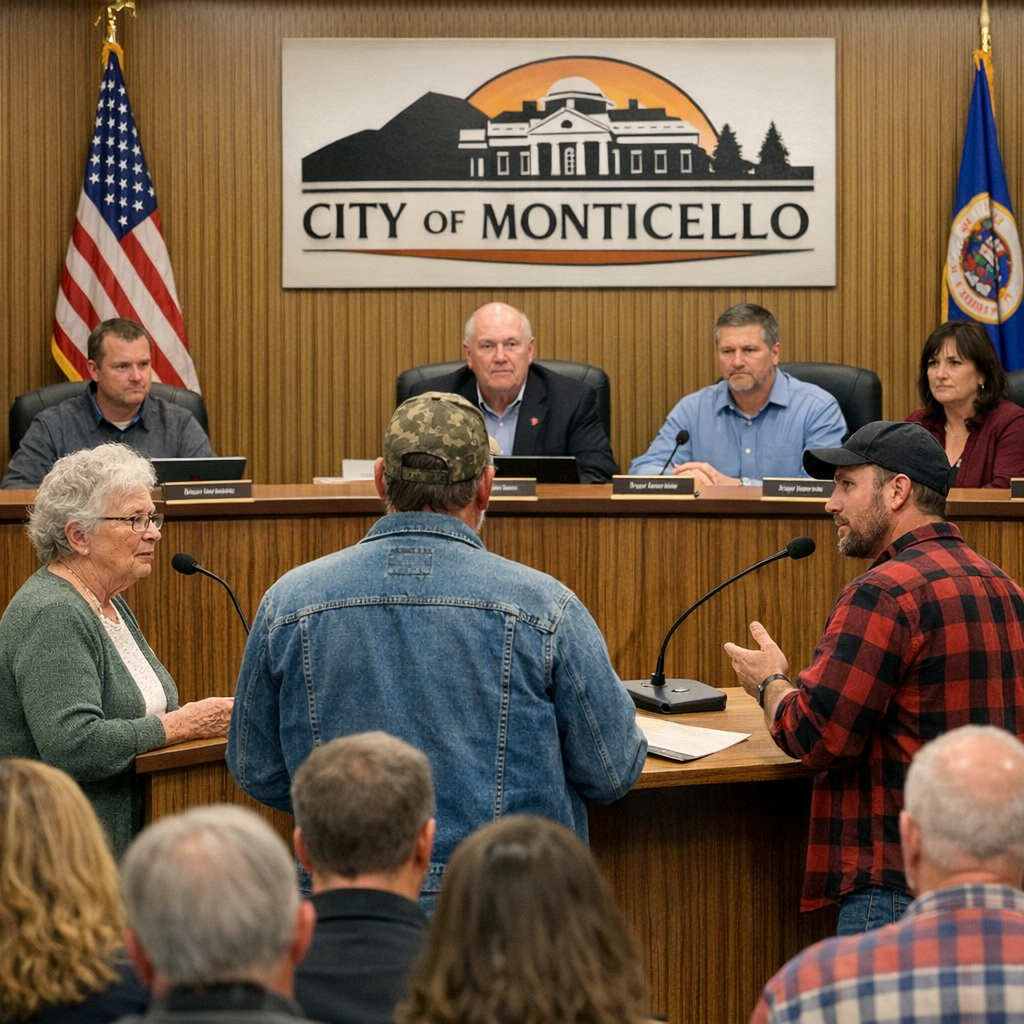
In public budget hearings, citizens were upset to find that they could not review drafts in detail before having to comment. Summaries circulated, but many said those omit too much. Concerns were raised about missing minutes, absent audits, and potential conflicts. When you feel shut out of process, any decision feels less legitimate.
What Monticello Needs Going Forward
- Early and meaningful engagement: Residents deserve to see draft proposals early, with clear comparisons of pros and cons. City reports are important — public hearings should feel like beginning of conversation, not end.
- Clear criteria for impact: What water usage is “too much”? How far is far enough for setbacks? What noise level is tolerable? We need measurable, enforceable standards.
- Commitments to regular reporting: Budget audits, meeting minutes, draft findings — all need to be easy to find and read. That builds trust.
- Roles for residents: Advisory boards, oversight committees, maybe even binding referendums — give people a clearer stake in the outcome.
Monticello is growing. That’s neither good nor bad by itself — it’s what comes next that counts. Growth can bring jobs, opportunity, and investment. But if it happens without transparency, without trust, without enough voices being heard, it risks leaving many behind.
This isn’t about opposing development — it’s about insisting that development answers our community’s needs. And that requires open conversations, measurable safeguards, and a city that doesn’t just talk about public input but actually listens and acts.